SEO auditsSEO and Website OptimizationWebsitesResponsive WebsitesContent MarketingMarketing on the Internet8 min czas czytania11 116 znaków1513 słów
Building an online presence: Tips for small and medium-sized entrepreneurs
Learn basic strategies for companies that can increase their online presence through SEO, content marketing and social media

Konrad BarejkoYour Business Partner, CEO · Experienced technology leader and entrepreneur with over 20 years of experience in the IT industry. Specializes in digital transformation, software product development and building engineering teams.
For nearly 15 years, he led B2B teams at a global technology corporation, managing a 40-person team of developers and engineers, multi-million dollar budgets and products deployed at the scale of tens of millions of licenses in EMEA and global markets.
Today, as the founder of his own consulting firm, he helps small and medium-sized businesses make smart technology decisions - from website and online store development, to process automation, to comprehensive IT consulting.
He combines strategic thinking with a hands-on technical background in web development, DevOps and software architecture. He focuses on a collaborative culture, agile methodologies and solutions that realistically support business growth.
Publikacja
Aktualizacja
Facts
- Participation of SMEs in the economy: Small and medium-sized enterprises generate nearly 45.3% of Poland's GDP, highlighting their key role in the national economy.
- Digitization of the SME sector: In 2023, 43.6% of SMEs in Poland produced GDP, and nearly 68% of the total workforce in the enterprise sector was employed in SMEs.
- Online presence: More and more entrepreneurs in the trade and service industry are beginning to take an interest in selling online. Nearly 44% of those surveyed already offer their services online.
- Use of social media: At the beginning of 2024, there were nearly 28 million active social media users, accounting for 68.8% of the total population.
- The value of the e-commerce market: Forecasts predict that the value of the Polish e-commerce market could reach PLN 192 billion by 2028, implying an average annual growth rate of 8%.
SEO, content marketing and social media.
Imagine walking down a bustling street full of potential customers. Every passerby is a chance to pitch your business - a unique networking opportunity. But what if you could expand that street, reaching not just hundreds, but thousands or even millions of potential customers? That's the power of a strong online presence.
In today's digital-based world, your company's online reach resembles a storefront on a busy street. However, instead of glass windows and signs on doors, you have websites, social media profiles and Google search engine results. Creating an effective online presence isn't just about getting noticed - it's about being seen by the right side of people, at the right time and in the right way. For small and medium-sized business owners like you who may feel disconnected from the digital world of IT and software development, demystifying the process of building an online presence can be transformative.
Creating a user-friendly website
Why it matters
Think of your website as a digital handshake - strong, friendly and professional. It is often the first point of contact between your company and potential customers. Just as you wouldn't greet visitors in a cluttered and... confusing physical space, your online space should be clean, easy to navigate and inviting.
Choosing the right platform
The journey to a great website starts with the right foundation. Platforms like WordPress, Squarespace and Shopify offer user-friendly interfaces tailored for those who may not have deep technical knowledge. Choosing the right platform is like choosing the perfect location for your store; it must support the structure and functionality you envision for your online presence.
Fundamentals of user-friendly design
User-friendly design is more than just good looks. It's about providing a seamless experience for visitors. Consider, for example, the simplicity of a well-organized store. Shelves are easy to access, items are easy to find payment is quick - your website should reflect this ease of use.
- Navigation: keep it intuitive. Like clear signs in a store that effortlessly direct customers, your website should guide visitors to the information they need without fuss or confusion.
- Speed: In the digital world, speed is hospitality. A slow-loading site is like a slow-moving queue in a store; it tests patience and increases the likelihood of abandonment.
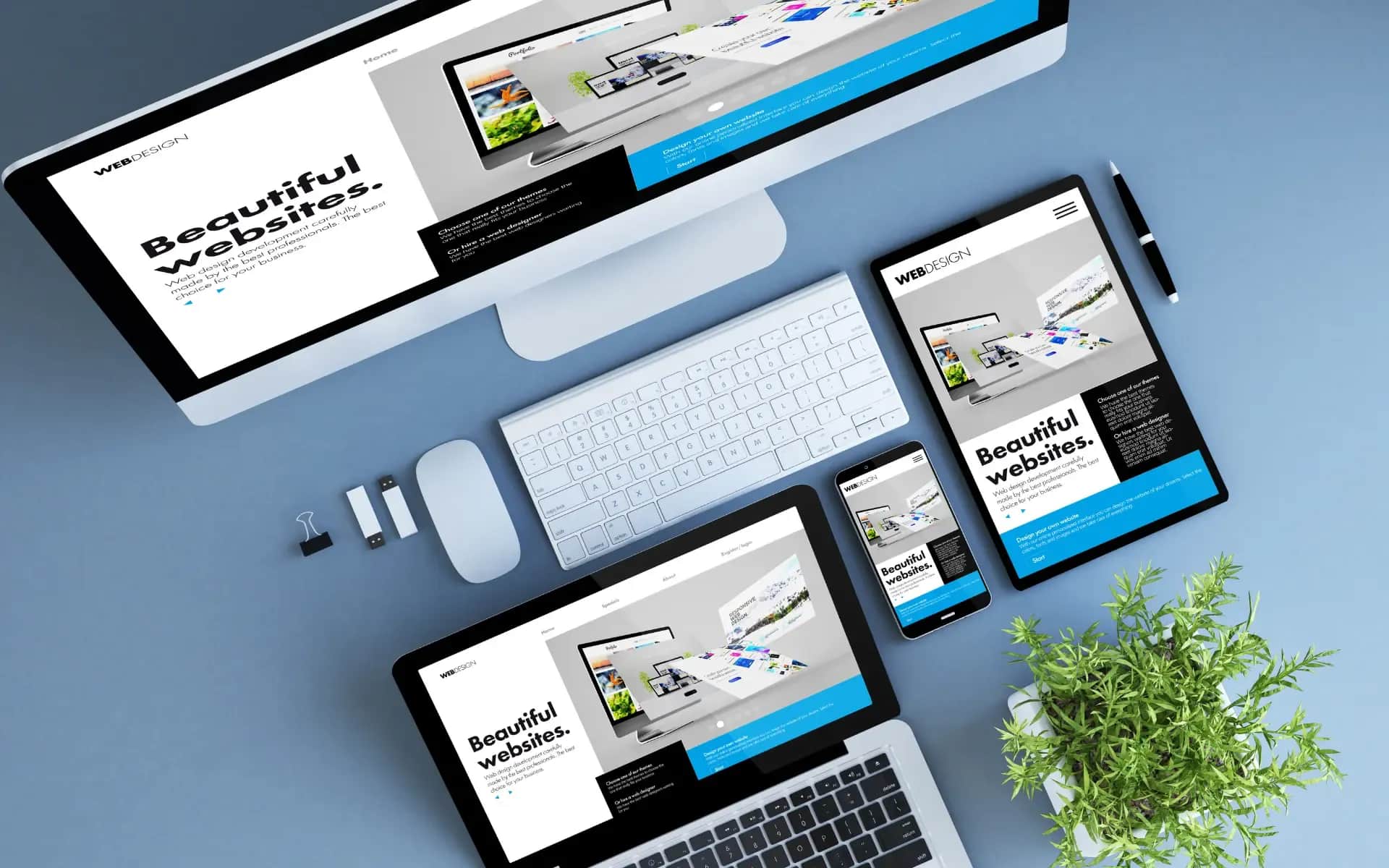
- Responsive on mobile devices: with more than half of the world's web traffic coming from mobile devices, having your website gracefully adapt to any screen size is equivalent to making your doors wide enough to welcome all visitors comfortably.
Engaging content
Your website content is your voice on the Internet. Just as an experienced shopkeeper can regale customers with stories about his or her products, your website should present your company's value in a compelling way. Use clear, engaging language and high-quality images that tell your story. Remember that content isn't just the most important thing; it's the personal connection you create with each visitor.
Call to action
Every page on your site should encourage interaction, whether it's contacting you, making a purchase or signing up for your newsletter. Think of it as the final statement at the end of a fascinating conversation with a potential customer who has entered your store.
Using SEO to increase visibility
Understanding SEO
Imagine you're a detective in a huge city and you're looking for the best coffee shop that no one knows about yet. Your tools? The clues people leave behind in their daily conversations and questions. In the world of the Internet, SEO (Search Engine Optimization) is like being a detective. It involves decoding the phrases and keywords that your potential customers use from search engines to find services or products like yours.
Keyword research tailored to your niche
Start by thinking about what specific search terms your ideal customer might type into Google. If you own a local bakery, it might be "best birthday cakes in my area" or "fresh gluten-free bread." This step is all about getting into customers' shoes - or rather, their minds. Tools such as Google's Keyword Planner or Moz's Keyword Explorer can help them identify key phrases that drive your site's content development.
Website optimization
Once you know what keywords to target with your ads, place them on your site in a natural and helpful way. This includes:
- Title tags and meta descriptions: these are the first things a potential customer sees in search results. Make them clear, descriptive and engaging.
- Headings and subheadings: clearly organize content and use headings to improve readability and SEO.
- Images and alternative text: every image on your site gives you a chance to improve SEO with descriptive alternative text this also helps visually impaired users.
The basics of local SEO
For small businesses, local SEO is akin to putting a pin on a map with a big, bright flag. It ensures that when someone nearby searches for a product or service you offer, your business will appear. This includes picking up your Google My Business Information account, getting local reviews and making sure your name, address and phone number (NAP) are consistent across all online platforms.
Content marketing to engage and retain customers
The role of content marketing
If SEO is about being found, content marketing is about being followed. Imagine that every piece of content you create is breadcrumbs on the path back to your business. This content isn't just about selling; it's about starting and sustaining conversations. Engaging, valuable content sets you apart as a thought leader and builds trust with your audience.
Types of content to consider
- Blogging: share insights, business updates and industry news. Not only are blogs great for SEO, they also help establish your brand's voice.
- Video content: whether it's behind-the-scenes tours, product demonstrations or customer reviews, videos can attract attention more effectively than many other types of content.
- Infographics: complex data or processes can be overwhelming; breaking them down into visually appealing infographics can help your audience clarify topics.
Understanding which content works
This is where audience knowledge really plays a key role. What challenges do they face? What information do they crave? Tools like Google Analytics and social media stats can show you what content is most appealing to your audience. For example, if a particular blog post on "Budget Friendly Marketing Strategies" is generating a lot of traffic, consider developing budgeting tactics or cost-effective tools in future posts.
Engagement through content
Remember that the goal of content marketing is not only to inform, but also to engage. Invite comments, ask questions and encourage readers to share their views. This interaction not only builds a community around your brand, but also further increases the reach and impact of your content.
Using social media to build community and brand identity
Choosing the right platforms
Not all social media platforms are created equal, especially when it comes to business. Choosing the right platform is like choosing the right area for your store; it's all about where your customers like to spend their time. For some businesses, it may be the visual realm of Instagram or Pinterest. For others, the conversational nature of Twitter or LinkedIn's professional network may be more appropriate.
Content strategies to increase engagement
The essence of social media is engagement. Imagine each post as part of a larger conversation with your audience.
- Consistency is key: regular posts put your business in the spotlight, much like your favorite coffee shop that you visit because it's always open when you need a dose of caffeine.
- Diversity of content: combine educational posts with behind-the-scenes content, user-generated content and promotions. This variety keeps your audience interested and engaged, much like a good host a lively and inclusive conversation at an event.
- Targeted ads: use social media ads to reach a wider or more specific audience. It's like sending out invitations to a grand opening; that way the right people know where and when to show up.
Community building
Building a community on social media is akin to building a loyal customer base in your area. Respond to comments, participate in relevant conversations and create hashtag campaigns that encourage users to interact. This one not only increases your visibility, but also deepens your relationship with your customers, making them feel part of your company's story.
Leveraging digital mastery
To summarize our journey through the basics of building a strong online presence, remember every element from a user-friendly website to effective SEO, compelling content marketing and dynamic social media strategies plays a key role in how your company is perceived online. Like a well-tuned orchestra, each section contributes to a harmonious and powerful overall performance in which your company conducts the symphony.
Now, with these insights and strategies, you are better equipped to navigate the digital landscape to elevate your business. It's about more than visibility - it's about creating meaningful connections that turn into lasting relationships. Think of it not as the end, but as the vibrant beginning of your ongoing journey of online mastery.
Finally, remember that your journey to improving your online presence is not a lonely one. Get in touch with us through the comments below, share your experiences, and let's continue the conversation across all our platforms. Your insights and stories fuel our community and help us all rise together. Whether it's a question you have or a success story you share, your voice is valuable in this ever-evolving digital marketplace.
Start today by evaluating one aspect of your online presence. Is your site truly user-friendly? Are your SEO efforts providing relevant traffic? Does your content resonate with your audience? Choose one area for improvement and set a goal to implement changes. Share your journey with us using our dedicated hashtag #OnlinePresenceMastery. Let's grow together, learn from each other and build a community of thriving businesses.
Related Posts
- Technological Startup of the Company - how to prepare the company to operate in the online world?
Planning to start a business? Find out how to get off to a good start with technology and marketing. What do you really need, and what can you implement later?
- 1.Strona firmowa na start – co naprawdę musi się na niej znaleźć?
Planujesz uruchomić swoją pierwszą stronę internetową? Dowiedz się, od czego zacząć, jakie błędy omijać i ile możesz zapłacić – wskazówki dla przedsiębiorców.
- 2.Start-up Success. Essential IT tools you can't do without
Discover the key IT tools that start-ups need to streamline operations and increase efficiency. Learn how the right tools can
- 1.
About the Author
Konrad Barejko
Your Business Partner, CEO
Experienced technology leader and entrepreneur with over 20 years of experience in the IT industry. Specializes in digital transformation, software product development and building engineering teams. For nearly 15 years, he led B2B teams at a global technology corporation, managing a 40-person team of developers and engineers, multi-million dollar budgets and products deployed at the scale of tens of millions of licenses in EMEA and global markets. Today, as the founder of his own consulting firm, he helps small and medium-sized businesses make smart technology decisions - from website and online store development, to process automation, to comprehensive IT consulting. He combines strategic thinking with a hands-on technical background in web development, DevOps and software architecture. He focuses on a collaborative culture, agile methodologies and solutions that realistically support business growth.