E-commerce operationsE-commerceUX/UI designSecurityMarketing on the InternetIT strategy19 min czas czytania23 672 znaki3704 słowa
Online Payment Methods for Swiss Stores — TWINT, Cards, PostFinance and QR-bill
Online payment methods for Swiss stores: TWINT and card rates, Apple Pay and Google Pay, the QR-bill, and why BNPL merchant fees aren't published.
Redakcja Digital VantageYour Partner in Business, Digital Vantage Team · Digital Vantage team is a group of experienced professionals combining expertise in web development, software engineering, DevOps, UX/UI design and digital marketing. Together we carry out projects from concept to implementation - websites, e-commerce stores, dedicated applications and digital strategies.
Our team combines years of experience from technology corporations with the flexibility and immediacy of working in a smaller, close-knit structure. We work in agile methodologies, focus on transparent communication and treat each project as if it were our own business.
The strength of the team is the diversity of perspectives - from systems architecture and infrastructure, frontend and design, to SEO and content marketing strategy. As a result, the client receives a cohesive solution where technology, aesthetics and business goals go hand in hand.
Publikacja
Aktualizacja
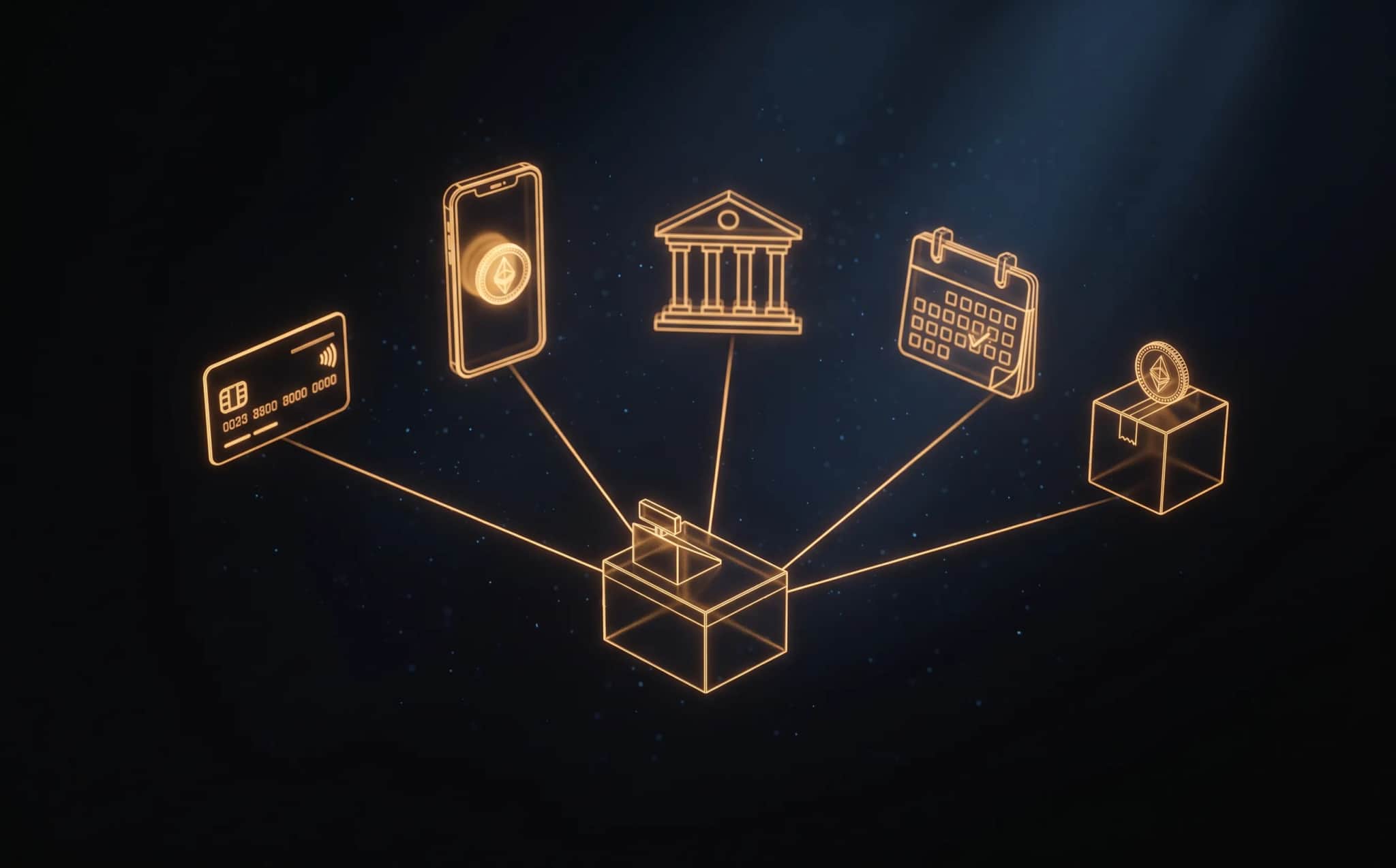
Online payment for a Swiss store isn't one service — it's a set of methods: TWINT, a card, a wallet on a phone, an invoice-style QR-bill, and increasingly a buy-now-pay-later option. Each costs something different and fails in its own way, and a method a customer wanted but didn't find usually means the sale went somewhere else.
This article goes through the methods one at a time: how each works, what it costs where a rate is published, and what can go wrong on the merchant's side. The full gateway-by-gateway comparison — setup fees, payouts, disputes — is in our separate article on payment gateway fees. Here we only cite a rate where it distinguishes one method from another.
Why the method mix matters
The most quoted figure on cart abandonment is the Baymard Institute average: 70.22% of carts never become an order (baymard.com, updated 22 September 2025). That's not a measurement Baymard itself ran — it's an average across 50 different studies from 2006 to 2025. Baymard doesn't publish a mobile-only figure, so any "mobile abandonment rate" quoted elsewhere doesn't come from this source, and there's no Swiss-specific study behind it either.
The reasons behind the number matter more than the average itself. In Baymard's own survey of US adult shoppers (excluding people who were "just browsing"), 9% said they abandoned because the store had too few payment methods, 19% because they didn't trust the site enough to enter card details, and 10% because their card was declined. The single biggest reason was extra costs at checkout (40%). The limitations are real: this is a US-market study with no stated sample size or date, and nothing Swiss about it — but the qualitative takeaway travels: missing a payment method, and distrust at the point of entering card data, are real reasons shoppers leave.
TWINT — the method a Swiss checkout is built around
TWINT is a mobile-app payment: the customer picks TWINT at checkout, confirms the amount in the app, and the payment is done — no card number, no bank login on the merchant's site.
What TWINT costs the merchant depends entirely on which gateway or acquirer you use, and the gap is bigger than for cards:
- Stripe CH: 1.9% + CHF 0.30.
- PostFinance Checkout, E-Com Bundle (turnover above CHF 200,000): 1.3% (min. CHF 0.20), plus a CHF 0.18 PSP fee.
- Shopify Payments CH, Basic plan: 1.75% + CHF 0.30.
At every one of these, TWINT undercuts the same provider's card rate — at Stripe CH by a full percentage point (1.9% vs. 2.9%), at PostFinance's E-Com Bundle by a quarter of a point (1.3% vs. 1.55%). If your Swiss customers already have TWINT on their phones, it's one of the few payment-cost levers available without renegotiating anything.
Cards — without the EU's interchange cap or SCA threshold
A card is still the default for customers without TWINT, and for international customers. Swiss card rates run higher than their EU equivalents at the same providers: Stripe CH charges 2.9% + CHF 0.30 for a Swiss card (3.25% + CHF 0.30, plus 2% for currency conversion, for an international one), against 1.5% + €0.25 on Stripe's EU page for a standard EEA card. The CH pricing page does not publish a dispute fee the way the EU page does (€20), so we have no comparable figure to quote for Switzerland.
Three EU rules that shape card economics inside the EU do not simply carry over here, and we say so rather than assume they do:
- No confirmed Swiss interchange cap. The EU's Regulation (EU) 2015/751 caps consumer-card interchange at 0.2–0.3%. We found no Swiss equivalent in the public record.
- No confirmed mandatory SCA threshold. The EU's RTS (EU) 2018/389 exempts online card payments up to EUR 30 from strong authentication. Switzerland has no equivalent mandatory rule that we could confirm — acquirers and card schemes set their own 3-D Secure risk rules domestically, so checkout friction on a Swiss card payment can look different from what the EU rule would produce.
- No confirmed ban on card surcharges. PSD2's Art. 62(4) bars surcharging for EU-regulated cards; we found no matching Swiss rule, though card-network rules (Visa, Mastercard) may still restrict it independently.
Apple Pay and Google Pay — a payment method, or an express checkout
Wallets can be built into a store in two ways. As a plain payment method, the customer completes the whole checkout and only swaps typing a card number for a wallet tap — the fee is the same as for a card. As an express checkout, a wallet button sits on the product page itself, and the address, e-mail and phone number come from the wallet. Stripe's Express Checkout Element is the global product behind this; by default it doesn't pass an e-mail address (you must request it explicitly), the Google Pay button only shows for customers who have it configured, and Apple Pay outside Safari needs extra setup. TWINT is not part of this element in Stripe's own documentation, so an express-checkout wallet button and a TWINT button are two separate pieces of your checkout, not one.
Shopify's equivalent, accelerated checkout buttons, lets a customer skip the cart entirely from the product page; Shop Pay stores the e-mail, payment method and address and claims "up to 50%" higher conversion against a guest checkout — a vendor claim with no stated sample or market, not a result to expect on your own store.
The QR-bill — an invoice-style method, not a card
Switzerland's standardised QR-bill, run by SIX, has been in circulation since June 2020 and definitively replaced the old Swiss payment slip on 1 October 2022 (six-group.com). New requirements have applied since 22 November 2025, and a further change restricting it to structured addresses only is scheduled for November 2026.
For an online store, a QR-bill works like an invoice: the customer gets a bill with a scannable QR code and pays it through their own e-banking, at their own pace, rather than at the moment of checkout. That makes it the Swiss method with the same practical risk profile as cash on delivery in other markets: the store ships (or starts the service) before the payment is certain. We found no merchant-fee figure published for QR-bill processing as a standalone method — it's typically bundled into an invoicing or accounting workflow rather than priced as a transaction fee the way a card or TWINT is.
Buy now, pay later — options exist, merchant pricing mostly doesn't
Two Swiss BNPL providers describe their consumer offer clearly, but neither publishes a merchant fee we could confirm:
- Swissbilling (swissbilling.ch): invoice payment, 0% financing for up to 48 months, and "pay later with TWINT… within 30 days". Merchant fees are not public.
- Powerpay (powerpay.ch): a monthly-invoice model with 12% annual interest on instalment balances for the customer. Merchant fees are not public.
Both describe the consumer side in detail — what the shopper pays, or doesn't — without saying what the merchant is charged for offering it. We're stating that gap rather than guessing a number, and neither appears with a cost figure in the comparison table below.
Choosing methods, cost and risk together
The table below shows each method's cost at an example CHF 100 order (illustrative, using the published rate from the provider named — your own contract may differ), and the risk it carries for the merchant.
Method | Cost at CHF 100 (example) | What can go wrong | Best for |
|---|---|---|---|
Card (Stripe CH) | CHF 3.20 | chargeback risk; no dispute fee published for CH | international customers, subscriptions |
TWINT (PostFinance E-Com Bundle) | CHF 1.48 | limited to customers with TWINT installed | the default Swiss checkout |
TWINT (Shopify Payments CH, Basic) | CHF 2.05 | same method, higher fee at this provider | Shopify merchants on Basic |
QR-bill / invoice | fee not public | goods ship before payment is certain, like cash on delivery elsewhere | B2B and trust-based relationships |
Payment methods in Switzerland: cost at a CHF 100 order and merchant risk
Digital Vantage worked example from Stripe, PostFinance and Shopify pricing pages, read 30 September 2026
How to put this together for your own store:
- Make TWINT the default, not an afterthought. It undercuts cards at every provider we checked.
- Add cards for international customers, and budget for the dispute risk — we found no published Swiss dispute-fee figure, so ask your provider directly rather than assuming it matches an EU number.
- Check whether your wallet implementation is a plain method or an express checkout — that's what decides whether a phone customer gets a shorter path.
- Treat the QR-bill as an invoicing decision, not a checkout toggle — it suits B2B and trust-based relationships more than impulse retail, and its merchant cost isn't published the way a transaction fee is.
- If you add BNPL, don't expect published merchant pricing from the Swiss-specific providers — rely only on what your own provider confirms.
- On a SaaS platform, check the gateway surcharge before comparing providers — see payment gateway fees for the Shopify CH numbers.
To run these costs together with subscription, hosting and maintenance costs over several years, use our e-commerce TCO calculator or the online store cost calculator. If you sell on a marketplace as well, marketplace integration explains how payment handling changes there.
FAQ
Frequently asked questions about online payment methods in Switzerland
Start with TWINT, which undercuts card fees at every provider we checked (1.3–1.9% against 1.55–2.95% for cards), then add cards for international customers. Apple Pay and Google Pay are worth adding if your gateway supports them as a genuine express checkout rather than just a plain payment method. A QR-bill suits invoice-style, trust-based sales more than impulse retail.
The customer selects TWINT at checkout and confirms the payment in the TWINT app — no card number and no bank login on the merchant's site. Merchant fees vary by provider: 1.9% + CHF 0.30 at Stripe CH, 1.3% + a CHF 0.18 PSP fee through PostFinance's E-Com Bundle (for turnover above CHF 200,000), and 1.75% + CHF 0.30 through Shopify Payments on the Basic plan.
The QR-bill is Switzerland's standardised invoice format, run by SIX, which definitively replaced the old payment slip on 1 October 2022. It works like an invoice rather than an instant checkout payment: the customer receives a bill with a scannable QR code and pays through their own e-banking at their own pace. We found no published merchant-fee figure for processing QR-bills as a standalone payment method.
No. Unlike the EU's 14-day withdrawal right, Swiss law does not provide a statutory withdrawal period for online purchases — the KMU portal (SECO) states this explicitly. Any return policy a Swiss store offers is voluntary, which is worth knowing when a payment method like a QR-bill or BNPL implies the customer can simply send goods back. See our article on returns and warranty for the details.
Want to match your payment methods to your actual customers?
We'll help you choose the methods and the provider on your own numbers — basket size, order volume, platform — before you sign anything.
Related Posts
- Payments and logistics in e-commerce — what fulfilling one order really costs
Payments and logistics in e-commerce in Switzerland: TWINT, card fees, Swiss Post parcel prices and returns under the Code of Obligations.
- 1.Selling Between Switzerland and the EU: VAT, Customs and Packaging
VAT selling into Switzerland (CHF 100,000 threshold) or into the EU (IOSS, EUR 150 limit), plus packaging registration, shipping and card-payment costs.
- 2.Returns in Switzerland: No Right of Withdrawal, Warranty Instead
Switzerland has no statutory right of withdrawal online. Instead: voluntary returns, the two-year Code of Obligations warranty, and UWG disclosure duties.
- 3.Ecommerce Shipping in Switzerland — Swiss Post Prices and Volumetric Weight
Swiss Post's business price list from 1 January 2026, volumetric weight, and My Post 24 — what actually decides ecommerce shipping cost in Switzerland.
- 4.Payment Gateway Fees for Swiss Online Stores — Stripe, PostFinance and Shopify Payments Compared
Payment gateway fees in Switzerland: Stripe CH, PostFinance and Shopify Payments rates, and why TWINT undercuts cards at every provider we checked.
- 5.Selling on Galaxus and Ricardo — Fees and Marketplace Integration
Ricardo's 8–12% success fee (capped at CHF 290), Galaxus' partner models, and how marketplace integration typically works for a Swiss online store.
- 1.
About the Team
Digital Vantage Team
Your Partner in Business, Digital Vantage Team
Digital Vantage team is a group of experienced professionals combining expertise in web development, software engineering, DevOps, UX/UI design and digital marketing. Together we carry out projects from concept to implementation - websites, e-commerce stores, dedicated applications and digital strategies. Our team combines years of experience from technology corporations with the flexibility and immediacy of working in a smaller, close-knit structure. We work in agile methodologies, focus on transparent communication and treat each project as if it were our own business. The strength of the team is the diversity of perspectives - from systems architecture and infrastructure, frontend and design, to SEO and content marketing strategy. As a result, the client receives a cohesive solution where technology, aesthetics and business goals go hand in hand.