Company StartStartupIT strategyWebsitesMarketing on the Internet11 min czas czytania13 542 znaki2046 słów
Technology for a new business — what to buy in week zero, and what can wait
What to buy when starting a business in Switzerland: domain, mail, invoicing, CRM, office suite, brand — with sources.

Konrad BarejkoYour Business Partner, CEO · Experienced technology leader and entrepreneur with over 20 years of experience in the IT industry. Specializes in digital transformation, software product development and building engineering teams.
For nearly 15 years, he led B2B teams at a global technology corporation, managing a 40-person team of developers and engineers, multi-million dollar budgets and products deployed at the scale of tens of millions of licenses in EMEA and global markets.
Today, as the founder of his own consulting firm, he helps small and medium-sized businesses make smart technology decisions - from website and online store development, to process automation, to comprehensive IT consulting.
He combines strategic thinking with a hands-on technical background in web development, DevOps and software architecture. He focuses on a collaborative culture, agile methodologies and solutions that realistically support business growth.
Publikacja
Aktualizacja
We recommend buying technology for a new business in the order events actually happen, not in one order in the first week. In week zero you need a name, a domain and mail on that domain. The first client requires an invoice and a place online where they can find you. The first enquiries call for one place to log contacts, and the first employee calls for shared accounts. The brand — logo, brand guidelines, a registered trade mark — can in our view wait until the market has answered the offer.
Most of these items are cheap. A sole proprietorship can be registered online through EasyGov, and a mailbox on your own domain costs a few francs a month. This page sets the buying order and, at every stage, links to the article that covers it in detail. We checked amounts and dates on 2 October 2026 unless a different date is given next to a figure.
Technology for a new business: five stages
Digital Vantage, own work, 2026-10-02
Before you start: registration in one paragraph
The SECO SME Portal describes EasyGov, launched in November 2017, which lets you register a new business with the compensation office for OASI (old-age and survivors' insurance), VAT and accident insurance in one place, and notify the commercial register. Entry in the commercial register only becomes compulsory once a sole proprietorship's revenue reaches CHF 100,000 in the most recent financial year (Code of Obligations, Art. 931(1)); below that you may still register voluntarily (Art. 931(3)). The federal fee for a new sole-proprietorship entry is CHF 80 (commercial-register fee ordinance, Annex 1.1); cantonal extras are not included in that figure. A UID business identification number is allocated free of charge to every business entity (UID Act, Art. 4). Under Art. 945(1) of the Code of Obligations, a sole proprietor's business name must use their family name as its essential content, with or without a first name. We cover social-insurance contributions, VAT and the rest of the money side in how much it costs to start a business.
Week zero: name, domain, mail
The first week is three decisions worth making immediately. Your name, your web address and your e-mail address end up on every invoice and every business card, so changing any of them later costs more than getting them right now.
Name. Check it in two places: Zefix, the central index of business names in the commercial register, and Swissreg, the trade-mark register of the Swiss Federal Institute of Intellectual Property (IPI), which shows Swiss and international marks with effect in Switzerland. How to think about competitors from the customer's side is in our article on the business model; the trade-mark databases a logo project should check are listed in logo design.
Domain. We don't have a public Swiss registrar or hosting price we can stand behind, so we're not inventing one. What we can state honestly is our own rate: in our own price list, a domain and its certificate together cost CHF 18 a year, net of tax — that's not a registrar's price, it's what it costs, with us, to keep the name renewed and the certificate valid. The mechanism is the same everywhere regardless of extension: compare on the renewal price, never the first-year price. Details are in web hosting cost. Turn on auto-renewal from day one.
Mail. An address on your own domain stays with you if you switch provider; an @gmail.com address doesn't. Zoho Mail Lite starts from around €0.90 a month per mailbox — Zoho's price page lists euros, and we have found no confirmation of billing in francs — up to CHF 8.40 for Google Workspace Business Starter with no annual commitment. More important than the price are the DNS records: Google requires that, since 1 February 2024, every sender writing to personal Gmail accounts has SPF or DKIM configured — including a one-person business. Where a mailbox can live and how to set those records up is in business email. How to secure the mailbox, including a second sign-in factor, is in protecting company data.
First client: an invoice, and a place where they can find you
At the first client, a business needs two things: an invoice it's allowed to issue, and somewhere online the client can check it out. Under the VAT Act (LTVA, Art. 26), a supplier must issue an invoice on request, and that invoice must carry the supplier's name and location, its VAT number (the UID followed by "MWST" or "TVA"), the recipient's name and location, the date or period of supply, the nature and extent of the supply, the consideration, and the applicable rate and tax amount. For the payment side, the QR-bill has been in circulation since June 2020 and definitively replaced the old Swiss payment slip on 1 October 2022, with new requirements in force since 22 November 2025. We have found no Swiss source either confirming or denying a general B2B e-invoicing obligation — so we aren't stating one. We cover the full picture, a priced paid tool, and the data checklist a business needs in invoicing software.
The second matter is being findable. How to set up and run a business listing is covered in our guide to the Google Business Profile, and when a simple site is enough — and what has to be on it — in brochure website. If the site has a contact form, it needs a data-processing notice too; what belongs in it is in the data-protection duty on a website.
First enquiries: where to log the client
Before you buy a customer-management system, log every enquiry in one place: who asked, when, about what, and what the next step is. Enquiries arrive by e-mail, phone and web form, so without a shared log a client's history ends up scattered across channels. In our view a paid CRM earns its place once that log stops being enough — because by then there's actually something to organise.
We found no Swiss-market vendor pricing we can stand behind for this hub, so we're not naming a figure: most systems charge per seat, and the sensible number depends on the size of the team you're planning for. When a CRM is actually worth it, and how to choose one, is covered in CRM for a small business.
Where the next enquiries come from is a separate question. The order of marketing activities is set out in our guide to internet marketing, visibility in search in the article on SEO for your website, acquisition channels in advertising your business online, and collecting reviews in Google reviews.
First employee: shared accounts
With a second person in the business come shared calendars, shared files, and the need for an account to belong to the business rather than to the employee. That's the point to buy an office suite. Google Workspace Business Starter costs CHF 7 per user a month with an annual commitment and CHF 8.40 without one. Microsoft 365 Business Basic costs CHF 5.67 with an annual commitment and CHF 6.80 billed monthly; the EEA edition without Teams — also sold on the Swiss store — runs CHF 4.37 on the annual commitment. Both vendors sell their business plans for up to 300 users (prices read 2 October 2026; the Microsoft page states VAT is not included).
The differences in storage, desktop apps, meetings and AI are covered in our comparison, Google Workspace or Microsoft 365. Who should have access to what, and how to close an account when someone leaves, is in protecting company data. Once repetitive tasks start eating into the team's time, the first automation examples — including handling incoming invoices — are in business process automation.
Brand: when a logo, when brand guidelines
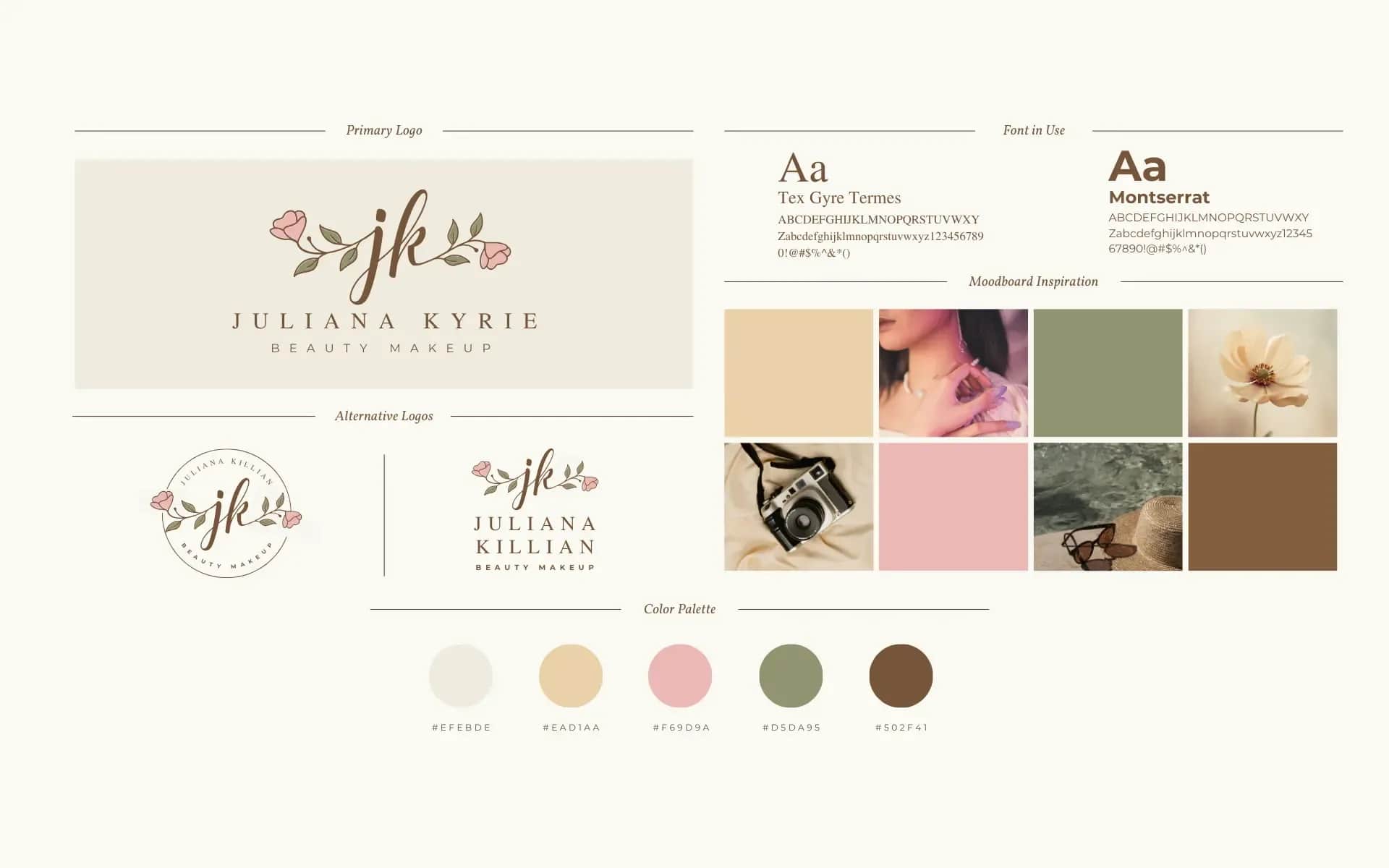
In our order, the brand is the last stage, because its cost only makes sense once you know the offer is landing with clients. Before that, a vetted name from week zero is enough. Once the market responds, start with a logo that comes with rights: under Art. 16 of the Copyright Act (URG), copyright is assignable, but the assignment of a copy's ownership does not include the right to exploit the copyright — and elements from Canva's library (other than fonts) can't be used in a trade mark under its licence either. We cover this in logo design. After that, write down the rules for using the mark — variants, clear space, minimum size, colours, typefaces. What that document looks like is in brand guidelines.
A Swiss trade mark costs CHF 450 to file for ten years and up to three classes, less a CHF 100 discount for filing online — CHF 350 by our own arithmetic on the fee table — with a further CHF 100 per class from the fourth (IPI, costs and fees, status 1 July 2024).
Buy now, buy later: the table
The table collects the items from the sections above in purchase order. We've been explicit where no public Swiss figure exists and described the mechanism instead of inventing one.
Item | When | How much (source) | What can wait |
|---|---|---|---|
Domain + certificate | week zero | CHF 18/yr, our own rate — no public Swiss registrar pricing found (web hosting cost) | nothing; turn on auto-renewal immediately |
Hosting | once the site is ready to launch | CHF 15/month shared hosting, our own rate (web hosting cost) | a pricier shelf (VPS, cloud), for as long as shared hosting is enough |
SSL certificate | bundled with hosting/domain | CHF 0 extra (Let's Encrypt; bundled above) | not applicable |
Mailbox on your domain | week zero | roughly €0.90–CHF 8.40 per mailbox/month (Zoho Mail Lite, listed in EUR, to Workspace Business Starter, vendor price pages, read 02.10.2026) | an office suite; the mailbox can sit on hosting or with a mail provider |
Invoicing | before the first invoice | no confirmed cost figure; invoice on request under LTVA Art. 26, QR-bill as payment; bexio from CHF 35/month (annual billing, excl. VAT) if paid software is needed | paid software, until you need automatic import, integrations or bookkeeping |
CRM | first enquiries | no vendor pricing we can confirm; most systems charge per seat | a paid system, for as long as one contact log is enough |
Office suite | first employee | Workspace Business Starter CHF 7/CHF 8.40; Microsoft 365 Business Basic CHF 5.67/CHF 6.80 (EEA no Teams CHF 4.37), per user/month (vendor price pages, 02.10.2026) | the whole suite, for as long as you work alone |
Trade mark | once the offer has found clients | IPI CHF 450 filing −CHF 100 e-discount = CHF 350 online, up to three classes (our arithmetic; IPI, status 1.7.2024) | registration; checking the name can't wait |
Buy now, buy later: technology for a new business
IPI, Google Workspace and Microsoft pricing pages (read 02.10.2026); web hosting cost (our own rates)
There's no single figure for what the first year of technology costs a new business in Switzerland — too much depends on the choices above. If you want a number for your own case rather than a guess, price it in our maintenance cost calculator.
Articles in this section
- How much does it cost to start a business: registration, social-insurance contributions, VAT, and what actually drives first-year costs.
- Business email: three places a mailbox can live, vendor prices, SPF/DKIM/DMARC records and step-by-step setup.
- Google Workspace or Microsoft 365: prices from both vendors, storage, desktop apps, meetings and AI.
- Invoicing software: the QR-bill, what a Swiss invoice must contain, and what paid software adds.
- Business model: the Business Model Canvas, Lean Canvas, Value Proposition Canvas, and building a persona from real conversations.
- Brand guidelines: what published brand guidelines actually contain, and how to write the core of one for a small company.
- Logo design: copyright and the designer's contract, a logo from Canva or an AI generator, trade-mark registration, and the files you'll need.
FAQ
Frequently asked questions about technology for a new business
There is no single figure, because so much depends on your own choices. A sole proprietorship can be registered online through EasyGov; entry in the commercial register only becomes compulsory from CHF 100,000 in revenue, and the federal fee for that entry is CHF 80. The priced items scale with your decisions: a mailbox from about €0.90 (Zoho, priced in euros) to CHF 8.40 a month, an office suite from about CHF 4.37 to CHF 8.40 per user a month once you hire, and a domain and certificate at CHF 18 a year on our own price list.
An invoice has to be issued on request under Art. 26 of the VAT Act (LTVA), and the QR-bill is the standard way to handle the payment part. We have found no Swiss source that confirms or denies a general B2B e-invoicing obligation, so we are not stating one either way — check directly with the Federal Tax Administration (FTA) or your fiduciary before assuming either answer.
Right away: a domain with auto-renewal on, and mail on that domain with SPF or DKIM configured, because Google requires one of those records from every sender writing to personal Gmail accounts. Before the first invoice: a way to issue one that meets Art. 26 LTVA. What can wait: a paid CRM, for as long as one contact log is enough; an office suite, until the first employee; and a logo, brand guidelines and a registered trade mark, until the offer has found clients. Check the name against Zefix and Swissreg in week zero, though — that one shouldn't wait.
Once a second person joins the business and you need shared calendars, shared files and accounts that belong to the business rather than to an employee. You don't need a suite for mail alone — a mailbox can sit on hosting or with a dedicated mail provider. Google Workspace Business Starter costs CHF 7 per user a month with an annual commitment and CHF 8.40 without one; Microsoft 365 Business Basic costs CHF 5.67 with an annual commitment and CHF 6.80 billed monthly. Both vendors sell their business plans for up to 300 users.
Starting a business and want to buy technology in the right order?
We'll help you work out what's needed in week zero, and what can wait until the first client or employee — from domain and mail to a site and invoicing tools.
Related Posts
- Technology for a new business — what to buy in week zero, and what can wait
What to buy when starting a business in Switzerland: domain, mail, invoicing, CRM, office suite, brand — with sources.
- 1.Logo design for a business — copyright, trade marks, and the files you need
Logo design in Switzerland: the designer contract, whether a Canva or AI logo is yours, what a trade mark costs at the IPI, and the files you need.
- 2.Sole proprietorship in Switzerland: what AHV, VAT and the commercial register cost in 2026
Sole proprietorship Switzerland costs: AHV/IV/EO contribution rates for 2026, the VAT exemption and the commercial register, with two worked examples.
- 3.QR-bill and invoicing software in 2026 — what a Swiss invoice must contain
What a Swiss invoice must contain, the QR-bill timeline, and free versus paid invoicing tools, with a vendor-neutral data checklist.
- 4.Google Workspace pricing vs Microsoft 365 — plans and what you get in a small business
Google Workspace pricing from CHF 7 per user a month, Microsoft 365 Business Basic from CHF 5.67. Plans, storage, meetings and AI compared in Swiss francs.
- 5.Corporate design — what brand guidelines contain, and how to write them for a small business
Corporate design on two published examples: logo variants, minimum size, HEX/RGB/CMYK/Pantone colour, typefaces, and a checklist for a small business.
- 6.Business Model Canvas — what it is, and how to map yours on one page before you start a business in Switzerland
Business Model Canvas in nine fields, Lean Canvas, the Value Proposition Canvas, persona and competitor analysis — straight from the tools' own authors.
- 7.Business email — what a mailbox on your domain costs, and how to set it up
Business email on your own domain from under a franc to about CHF 8.40 a month. Where to host a mailbox, and the SPF, DKIM and DMARC records Gmail requires.
- 1.
About the Author
Konrad Barejko
Your Business Partner, CEO
Experienced technology leader and entrepreneur with over 20 years of experience in the IT industry. Specializes in digital transformation, software product development and building engineering teams. For nearly 15 years, he led B2B teams at a global technology corporation, managing a 40-person team of developers and engineers, multi-million dollar budgets and products deployed at the scale of tens of millions of licenses in EMEA and global markets. Today, as the founder of his own consulting firm, he helps small and medium-sized businesses make smart technology decisions - from website and online store development, to process automation, to comprehensive IT consulting. He combines strategic thinking with a hands-on technical background in web development, DevOps and software architecture. He focuses on a collaborative culture, agile methodologies and solutions that realistically support business growth.